
March 18, 2026
Why Evenings Hurt So Much: Understanding the Rhythms of Grief
When someone is grieving, distractions often become an important part of getting through the day. Work, errands, conversations, responsibilities, and small daily tasks can pull your attention outward and give your mind something else to focus on for a while. In many ways, this is healthy and necessary. Grief is heavy, and very few people can sit with that weight every moment of the day.
But not all distractions serve us in the same way. Some provide the structure and relief that help us keep moving forward. Others simply help us avoid what we are feeling. Part of learning to live with grief is beginning to understand the difference between the distractions that support us and the ones that quietly keep us from processing the loss.
Psychologists often describe this balance in simple terms. Some distractions support the grieving process, while others delay it.
Supportive distractions give the mind and body a temporary break from the intensity of loss. They allow you to engage with life for a while, working, caring for others, completing tasks, or spending time with people who bring a sense of normalcy. These moments do not erase grief, but they help you move through the day without being overwhelmed by it.
Avoidant distractions work differently. Instead of offering relief, they keep the mind constantly occupied so the grief never has space to surface. When every quiet moment is filled with noise, activity, or stimulation, the emotions connected to the loss often remain just beneath the surface.
Most grieving people move between these two states without realizing it. Some distraction is necessary and even healthy. But when distraction becomes constant, it can make the quieter moments - especially in the evening - feel much harder than expected.
Understanding this difference can help you approach your own distractions with more awareness. The goal is not to eliminate them. It is to allow both engagement with life and space for grief.
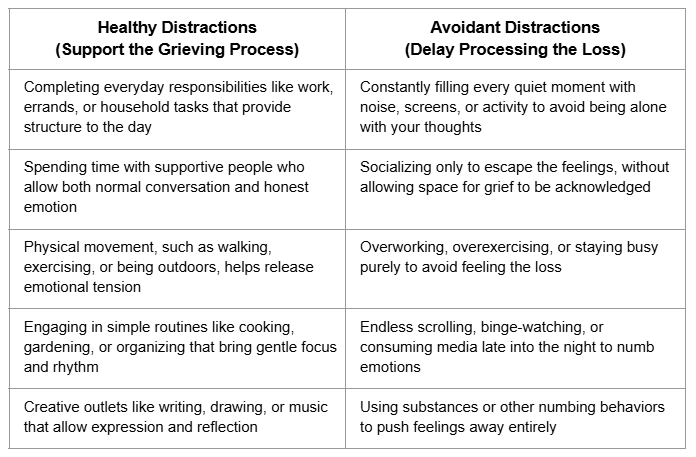
Healthy distractions give the mind and body short periods of rest from the intensity of grief while still allowing the loss to exist. Avoidant distractions, on the other hand, can keep the mind so occupied that grief has no space to surface until the quiet moments arrive. The challenge with these kinds of distractions is that they do not remove grief; they simply delay it. Loss does not disappear because we stay busy. Eventually, when the distractions fade, the emotions connected to that loss remain, waiting to be felt.
Understanding this difference can help you approach your own distractions with more awareness. The goal is not to eliminate distraction entirely. It is to find a balance between engaging with life and allowing space for grief to be acknowledged and processed over time.


OUR MISSION
We are a nonprofit founded in honor of Jenna Betti, funding programs to empower and inspire people to thrive despite adversity.
Need Support Now?
 hersmile